5 products, sold by My Tool Shed
All 5 pressure washers in this collection, ranked on specs, value and price. Use the filters to narrow them down.
No pressure washers match those filters. Try widening your budget or clearing a feature.
Why it stands out
Why it stands out
Why it stands out
Why it stands out
Why it stands out
Hot water pressure washers heat the water with a diesel burner before it leaves the lance, so they cut through oil and baked-on grime that a cold jet only smears around. They are made for workshops, farms, plant hire yards, fleet depots and food sites, where cleaning is a daily job rather than a weekend one.
We list five machines sold by My Tool Shed, from the compact Sealey PW2000HW and the upright Kärcher HDS 5/11 UX to the petrol-driven HDS 1000 BE for sites with no mains power. For cold water trade machines, see our industrial pressure washers.
A hot water pressure washer is a normal high pressure pump with a burner and heating coil added. Cold water comes in from the tap, the pump pressurises it, and on its way to the gun it passes through a steel coil heated by a diesel (heating oil) burner. Most hot water pressure washers heat to around 80°C; the bigger Kärcher middle class models go further, up to 155°C, which turns the jet into a steam stage.
You will also see them sold as a heated pressure washer, a hot washer or a hot and cold pressure washer. They are all the same idea: every one of them still runs cold, so you switch the burner on only when the job needs it. The motor or engine drives the pump; the burner only heats the water. That is why an electric hot water machine still has a fuel tank, and why it gives off exhaust while the burner is lit.
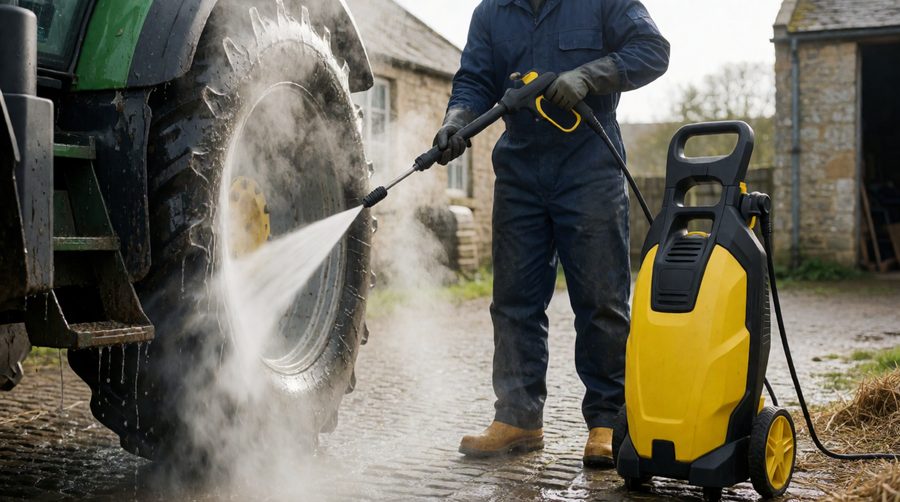
Heat does what pressure alone cannot. Oil and grease soften as they warm up, so a hot jet lifts them off the surface instead of spreading them about. The maker puts it simply: with hot water, a pressure washer cleans better at the same pressure. In practice that means:
A cold water pressure washer is still the right tool for mud, algae, patios, decking and cars. It costs far less to buy and run, has no burner to service and no fumes. If your dirt is mostly soil and green growth, look at our powerful jet washers or electric pressure washers instead.
All five machines on this page, with specs from the My Tool Shed feed. Prices change daily, so we give bands rather than exact figures.
| Machine | Power | Pressure | Flow | Max temp | Fuel tank | Weight | Price band |
|---|---|---|---|---|---|---|---|
| Sealey PW2000HW | 230V, 2.3kW | 135 bar max | 7 L/min (420 l/h) | Not stated | 4.9 litres | 41kg | £1,400-£1,550 |
| Kärcher HDS 5/11 UX | 230-240V, 2.2kW | 110 bar | 450 l/h | 80°C | 6.5 litres | 69.9kg | £1,350-£1,500 |
| Kärcher HDS 6/12 C | 240V, 3kW | 30-120 bar | 240-560 l/h | 80°C | 15 litres | 107.4kg | £2,500-£2,700 |
| Kärcher HDS 7/10-4 M | 230-240V, 3kW | 30-100 bar | 350-700 l/h | 80-155°C | 25 litres | 182.5kg | £4,000-£4,200 |
| Kärcher HDS 1000 BE | Petrol, Honda GX 390 13hp | 40-210 bar | 450-900 l/h | 80-98°C | 6.5 litres | 175.7kg | £7,700-£7,900 |
Kärcher rates the HDS 5/11 UX for up to an hour of use a day and the HDS 6/12 C for two to three hours. The HDS 7/10-4 M is a middle class machine built for day-to-day cleaning.
Hot water pressure washers fall into four groups, set by how often you clean and whether there is power on site.
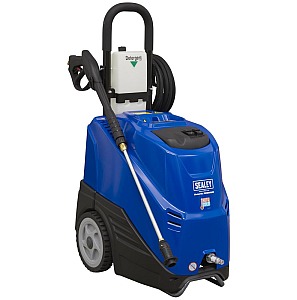
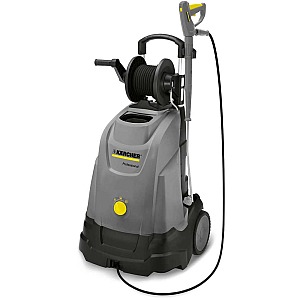
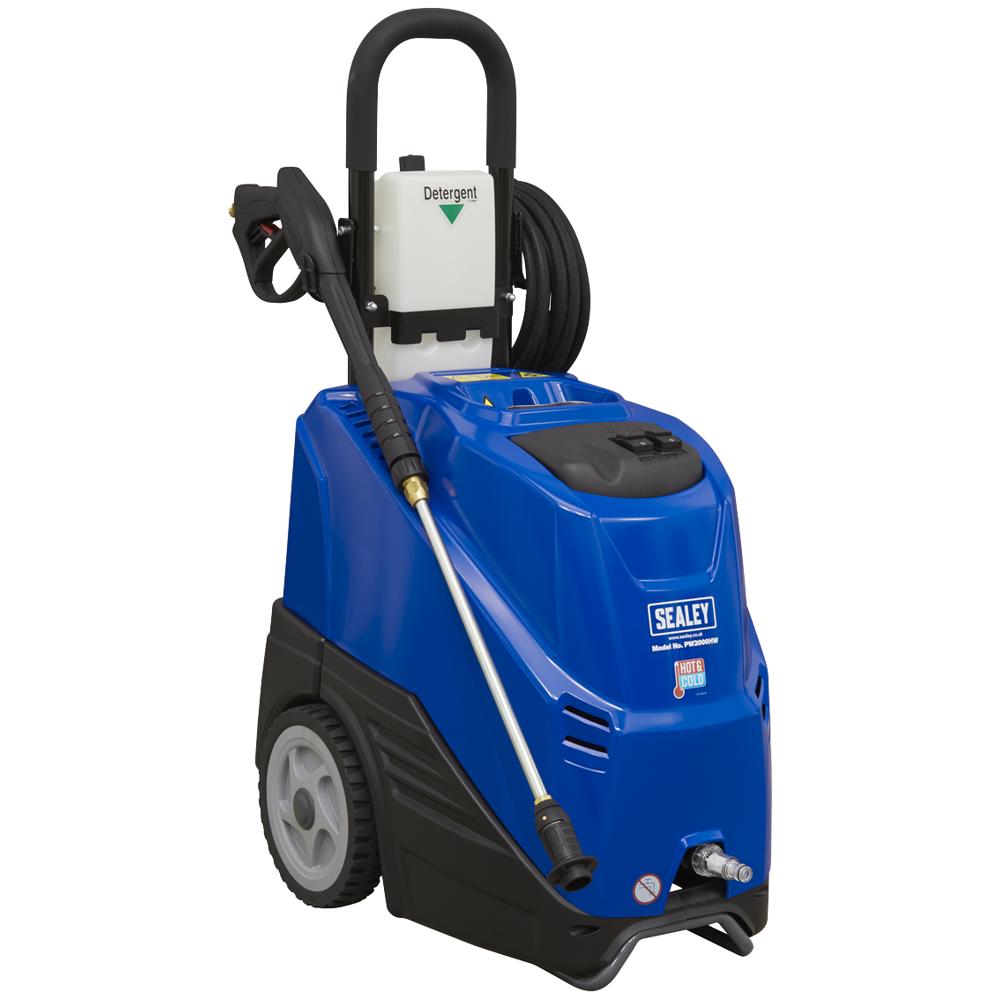
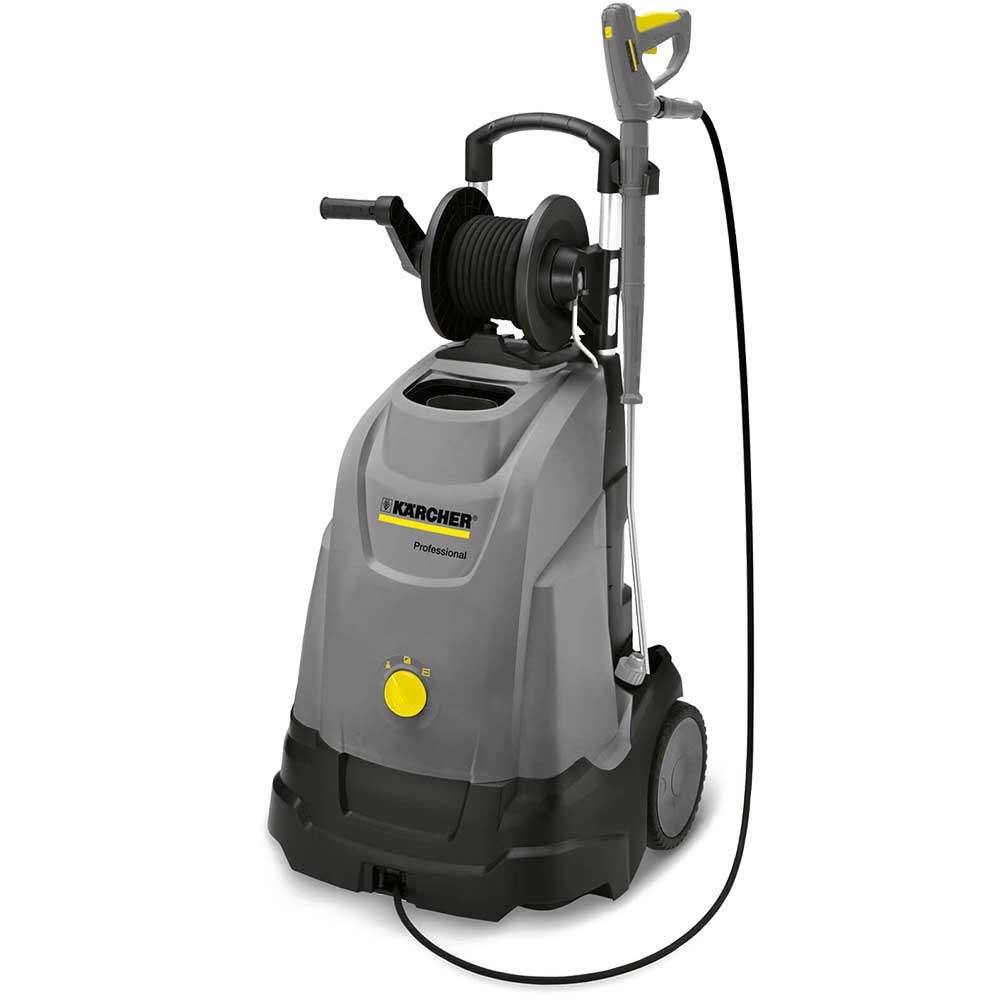
The Sealey PW2000HW and the Kärcher HDS 5/11 UX are the entry point. Both draw under 2.5kW, so they suit a garage, small farm or mobile valeter. The Sealey is the lighter of the two at 41kg, with an 8 metre hose on a reel, a built-in detergent tank and a Total Stop System that only runs the motor and heater while you hold the trigger. The Kärcher is an upright design with large wheels and a 15 metre hose on a reel, and its spill proof pump and fuel tank let you lay it down in a van.
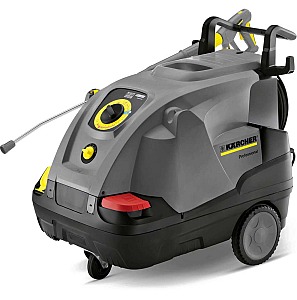
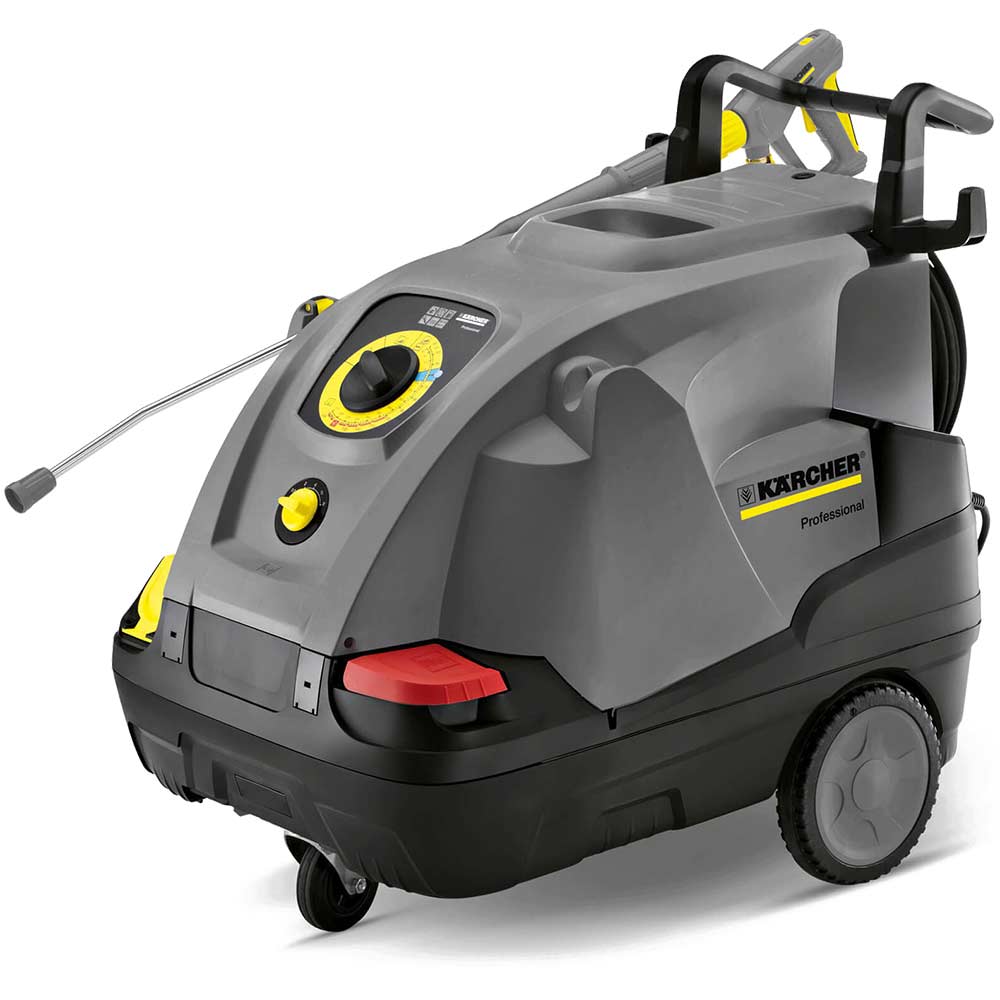
The Kärcher HDS 6/12 C is the all-rounder: 120 bar, adjustable pressure and flow, and eco!efficiency mode, which Kärcher says cuts diesel use by 20% without losing cleaning power. Its 15 litre fuel tank, tilting aid for kerbs and steps, and three year burner coil warranty (through the Machine Protector system) make it a sensible choice for a fleet yard or council depot.
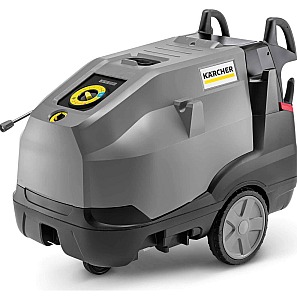
The HDS 7/10-4 M is the one for food processing, agricultural and industrial users who clean for hours. It heats from a 12°C supply to between 80 and 155°C, has a water-cooled four pole motor, a three piston axial pump with ceramic pistons, two detergent tanks with a dosing unit and a 25 litre fuel tank. It is still single phase, which saves the cost of a three phase supply.
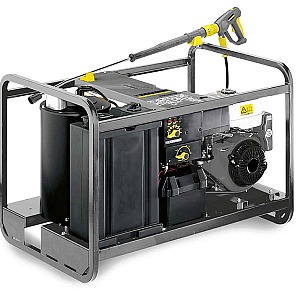
The HDS 1000 BE runs without a socket: a Honda GX 390 petrol engine with electric start drives the pump, while its diesel burner heats the water to 98°C. It delivers up to 210 bar and 900 litres an hour, and its steel tube frame can be lifted by crane. It suits plant hire, construction and farms. For cold-only machines with an engine, see our petrol pressure washers.
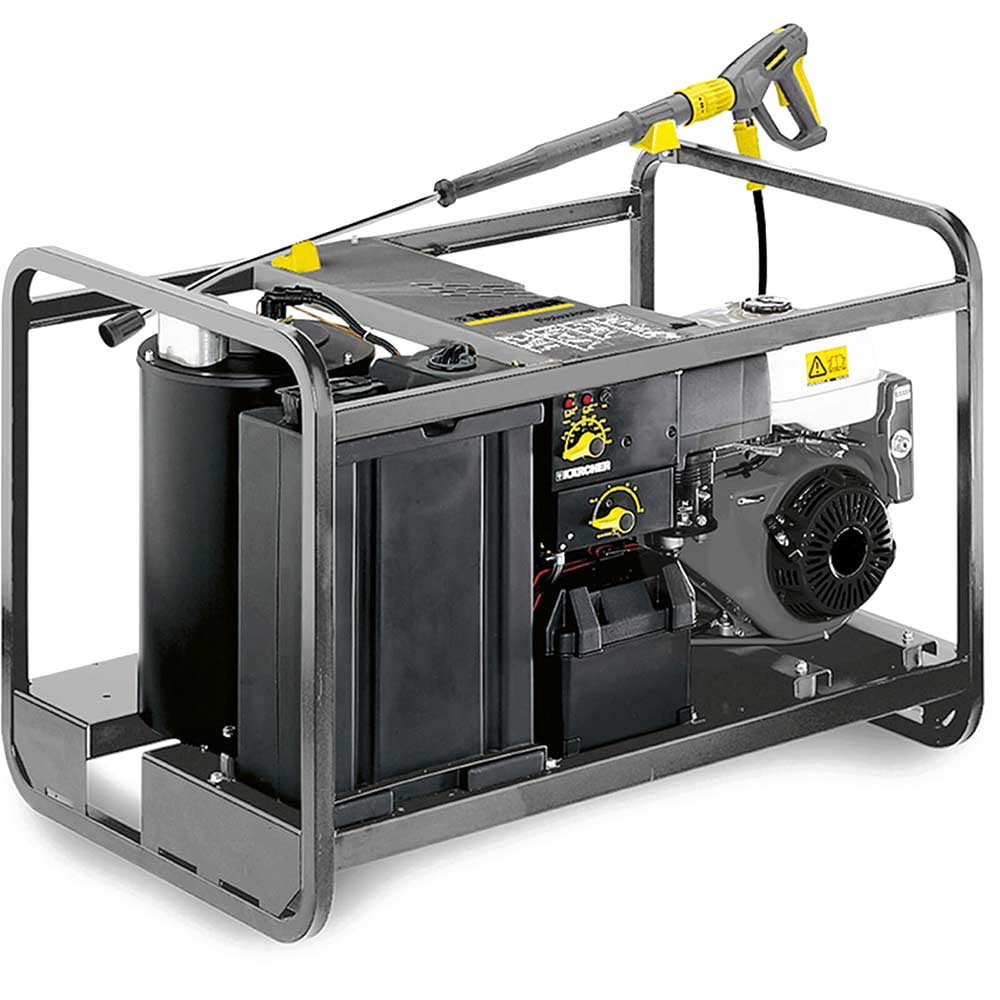
Four of the five machines here are Kärcher HDS models. The maker sorts its HDS hot water range into classes: Upright (the U in HDS 5/11 UX) for occasional use in workshops and small garages, Compact (the C in HDS 6/12 C) for frequently changing locations, Middle class (M) for day-to-day cleaning, Super class for the heaviest work, combustion engine machines for sites with no power, and electrically heated special class models for hospitals and kitchens where exhaust gases are not allowed.
All four come with the EASY!Force trigger gun, which takes the strain off your hand on long jobs. The HDS 5/11 UX, 6/12 C and 1000 BE also have a full ceramic valve that Kärcher says lasts five times longer. Other makers such as Nilfisk also build hot machines, and the same buying points apply. Compare these with the cold water HD models on our Kärcher professional pressure washers page.
The burner gives off exhaust fumes, including carbon monoxide, so run hot water pressure washers outdoors or in a well ventilated bay, never in a closed garage. The HSE explains the risks of carbon monoxide. Hot water and steam can scald, so wear gloves, boots and eye protection, and never point the lance at people or animals.
Electric machines used at work need maintaining like any other portable equipment; the HSE guidance on portable appliance testing sets out what is expected. Use a residual current device (RCD) outdoors.
Hard water leaves scale in the heating coil, which costs you heat and fuel. Kärcher makes RM 110 limescale inhibitor for its HDS machines, which you will find with our pressure washer detergents. Have the burner serviced regularly, keep the fuel filter clean, and drain or frost protect the machine before winter.
Finally, think about where the dirty water goes. Oily wash water and detergent must not go into surface water drains; the government's pollution prevention guidance for businesses explains the rules on wash water and oil separators.
If you clean oil, grease, fat or animal waste regularly, yes. The work goes much faster and uses less detergent. For mud, moss and cars at home, a cold machine is the better buy.
The burner runs on diesel (heating oil), so every machine here is in effect a diesel hot water pressure washer. Kärcher says the HDS 5/11 UX and HDS 6/12 C also suit biodiesel. The pump runs on mains electricity, or on petrol in the HDS 1000 BE.
Yes. Leave the burner off and it works as a normal cold water machine, which saves fuel on jobs that don't need heat.
Most reach about 80°C. The HDS 1000 BE reaches 98°C and the HDS 7/10-4 M goes up to 155°C in its steam stage.
You can, but keep the heat low and stand well back, as very hot water can harm wax, trim and decals. For most drivers, a cold machine from our pressure washers for cars page does the job.
All four electric machines on this page are single phase (230-240V). Check your circuit can take 2.2 to 3kW, especially for the 3kW models.
