6 products, sold by My Tool Shed
All 6 pressure washers in this collection, ranked on specs, value and price. Use the filters to narrow them down.
No pressure washers match those filters. Try widening your budget or clearing a feature.
Why it stands out
Why it stands out
Why it stands out
Why it stands out
Why it stands out
Why it stands out
Makita pressure washers come in two halves: compact 240V corded machines from 100 to 130 bar (the HW101, HW1200 and HW1300), and cordless models that run on the batteries you may already own for Makita drills and saws, from the light 18V LXT DHW180 up to the 115 bar 40V XGT HW001G. They suit tradespeople and home owners who want a solid, quiet jet wash for vans, tools, cars and patios.
Comparing brands? See Karcher pressure washers, Bosch pressure washers or every cordless pressure washer we list. Every Makita here is sold by My Tool Shed.
Makita is best known for cordless power tools, and that shows in its cleaning machines. Half the range runs on its LXT and XGT battery platforms, and the corded models are built like site tools rather than garden toys. Makita UK's range has more models than we list, but the six here cover every type: a budget corded unit, two bigger corded machines, and three cordless washers on 18V, twin 18V and 40V batteries. Model names give the bar figure away on the corded ones (HW1300 = 130 bar); the cordless ones you have to read the spec sheet for, so we've done that below.
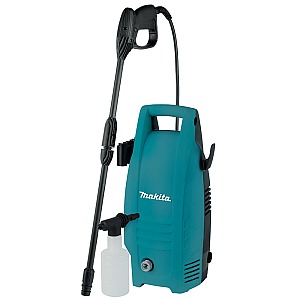
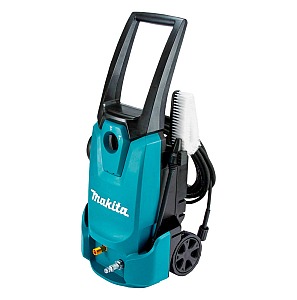
The Makita HW101 is the compact, cheap entry point: 100 bar, 360 litres an hour, a 1,300W motor and 6.5kg. It's better built than most washers at its price, with a triplex wobble plate pump, stainless steel pistons, an aluminium pump head and Total Stop, which cuts the motor when you let go of the trigger. The catch is the 3m hose, so you move the machine a lot.
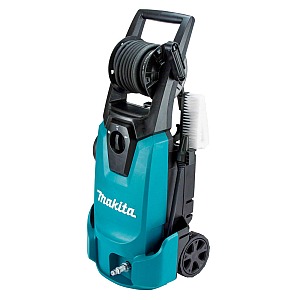
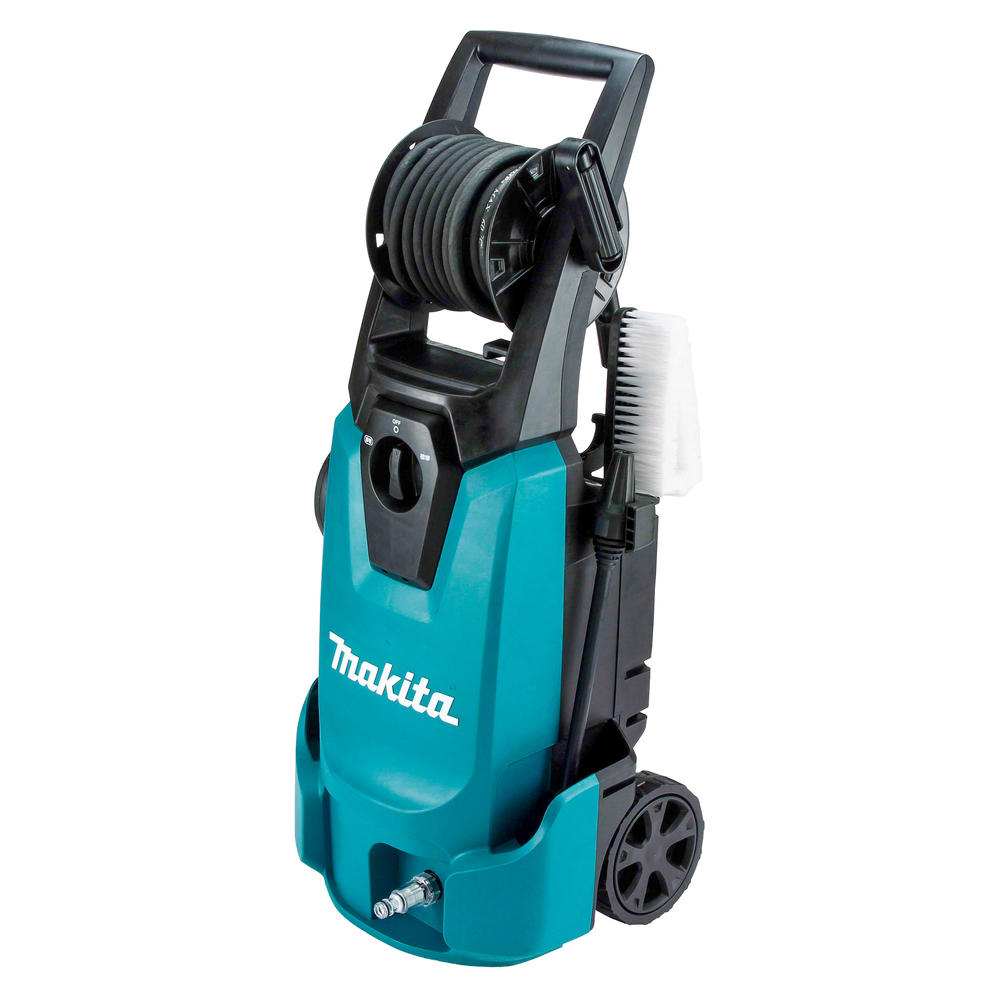
The Makita HW1200 steps up to 120 bar (100 bar working pressure), 420 litres an hour and a 1,800W series motor. It comes with a 10m hose and a 5m power cord, self-primes up to 1m, and is one of the quietest in its class at 72 dB(A). The Makita HW1300 adds 130 bar, 450 litres an hour, Hi and Lo pressure settings (110 and 80 bar), a Vario Power lance, a foam nozzle and a built-in reel for its 10m hose. Both weigh 11 to 13kg and roll on wheels.
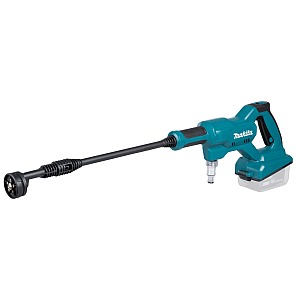
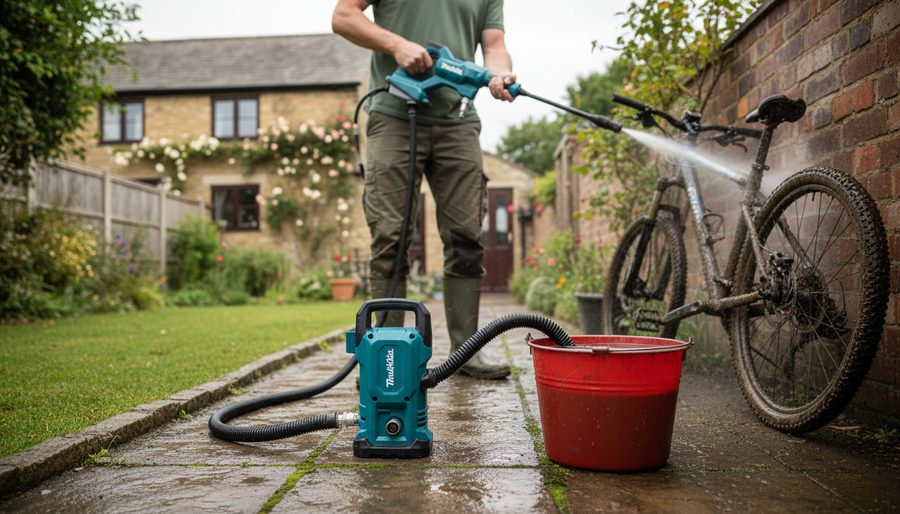
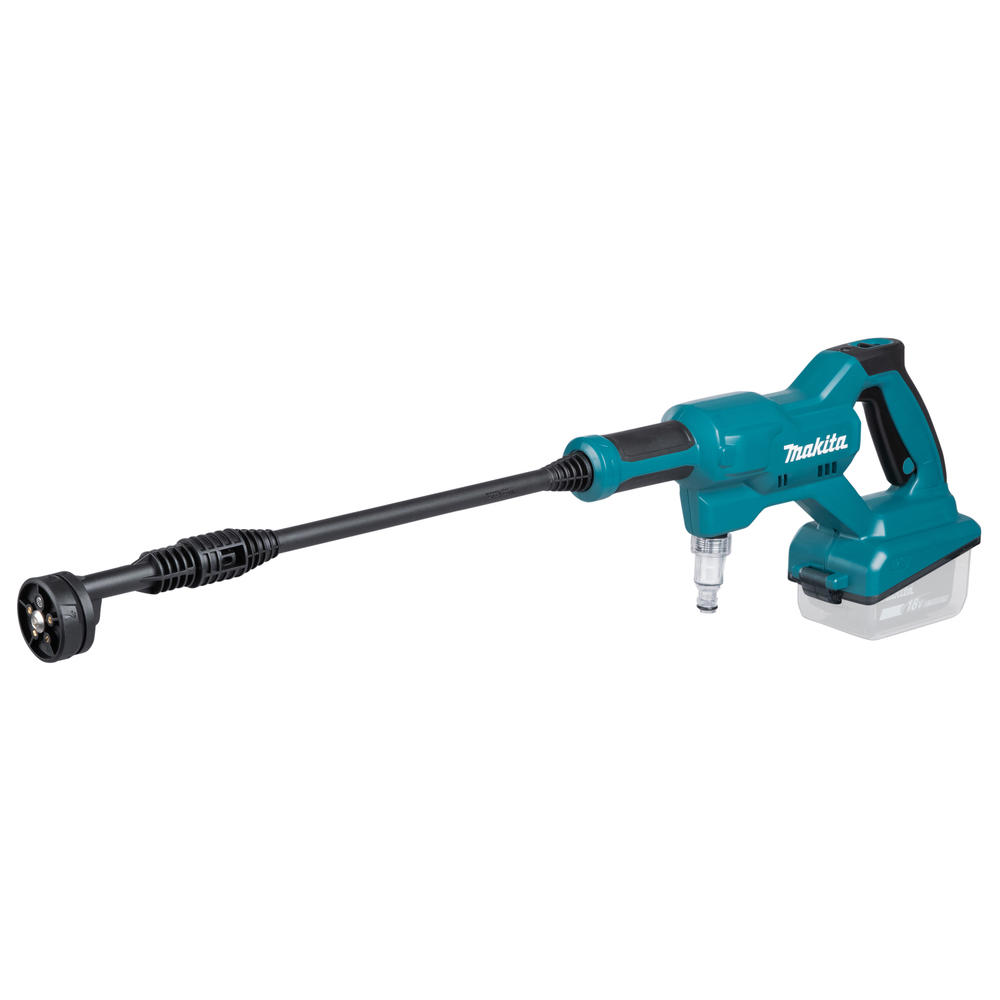
The DHW180Z is the Makita pressure washer 18V owners of LXT drills usually buy first. It is a low pressure cordless cleaner: 24 bar maximum (8 to 24 bar working), 5.3 litres a minute, a 5 in 1 nozzle and two power modes. It draws water from a bucket, water butt or stream up to 2m below, so it works anywhere, and Makita's XPT (eXtreme Protection Technology) sealing keeps out splashes and dust. That's ideal for rinsing bikes, muddy boots, garden tools, a van's wheels or a dog, but not for lifting moss off a patio.
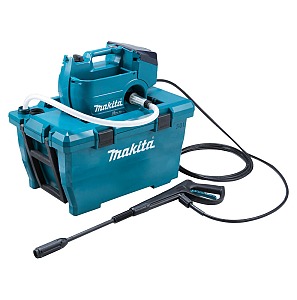
The DHW080ZK uses two 18V LXT batteries for 36V and a brushless motor. It gives 55 bar on high and 30 bar on low (80 bar maximum), about 6.3 litres a minute, and a stepless Vario lance. Its storage case doubles as a 50 litre water tank, and it self-primes from that, a bucket or a tap. It's built for valeters, window cleaners and anyone washing vans or machinery away from mains power.
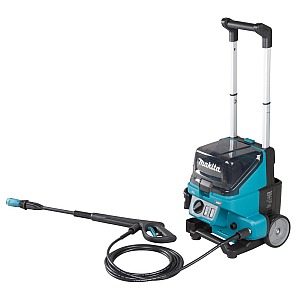
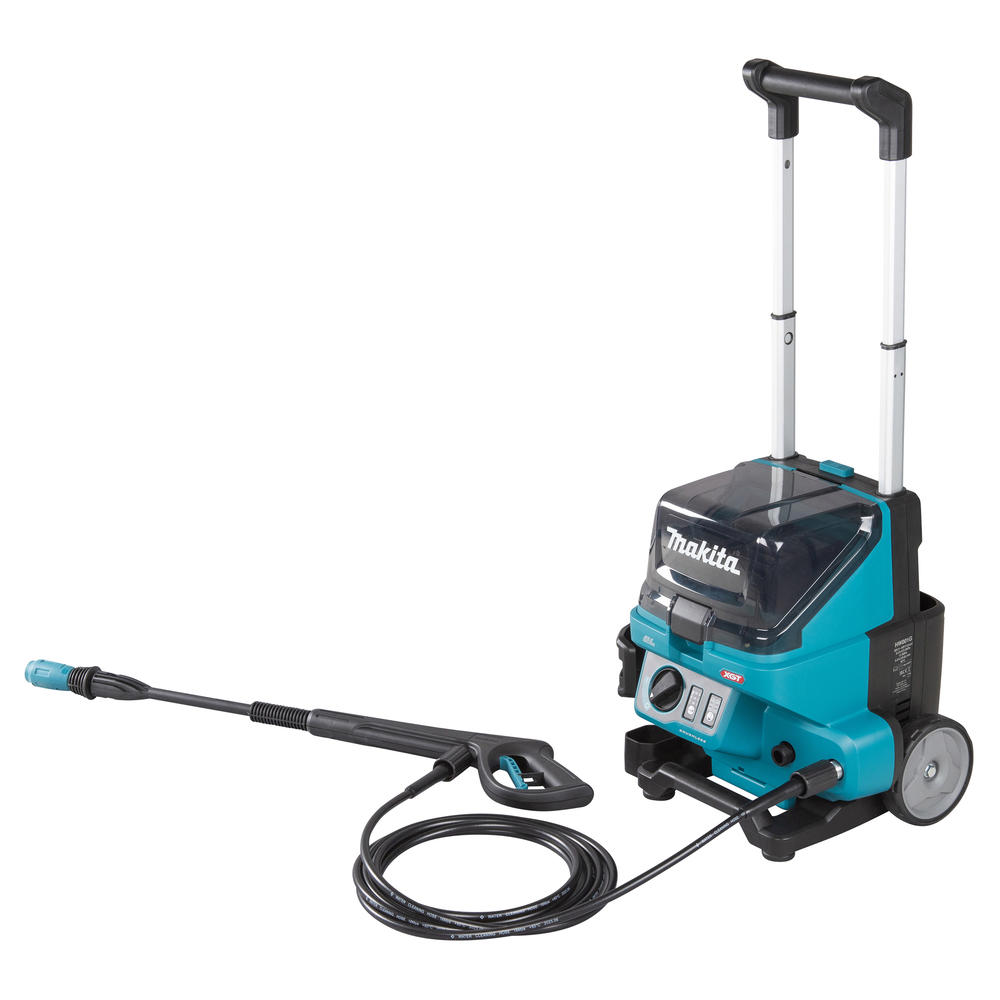
The HW001GZ is the most powerful Makita cordless pressure washer: 115 bar maximum (30 to 85 bar working), 7 litres a minute and a 1,200W brushless motor on one or two 40V XGT batteries. With a 5m hose, a foam nozzle, 140mm wheels and a telescopic handle it's the nearest thing to a corded washer without a cable. It weighs 8.5kg before the batteries go in, and has XPT and IPX5 water protection.
Every model on this page side by side, from the specs on the retailer's listings and the maker's own sheets. Prices change daily, so we give bands rather than exact figures.
| Model | Power | Max pressure | Max flow | Hose | Weight | Price band |
|---|---|---|---|---|---|---|
| HW101 | 240V, 1,300W | 100 bar | 360 l/h | 3m | 6.5kg | under £100 |
| DHW180Z | 18V LXT battery | 24 bar | 5.3 l/min | 6m | 2.3 to 2.7kg | £100 to £150 |
| HW1200 | 240V, 1,800W | 120 bar | 420 l/h | 10m | 11kg | £350 to £400 |
| HW1300 | 240V, 1,800W | 130 bar | 450 l/h | 10m on reel | 12.7kg | £400 to £450 |
| DHW080ZK | 2 x 18V LXT (36V) | 80 bar | 6.3 l/min | 5m | 7.1 to 7.9kg | £450 to £500 |
| HW001GZ | 40V Max XGT battery | 115 bar | 7 l/min | 5m | 8.5kg | £600 to £650 |
For comparison, 6 litres a minute is 360 litres an hour. Cordless weights include batteries except the HW001GZ (bare tool). None of the cordless models come with a battery or charger.
Not sure how much pressure your jobs need? Our guide to what bar pressure washer you need goes through it surface by surface, and our pressure washers for patios and driveways page lists the strongest options for hard ground.
Every cordless model here is sold body only, so budget for batteries and a charger unless you already have them. The good news is that they're the same packs as the brand's drills, saws and garden tools:
Water runs out faster than the battery when you're working from a bucket, so for longer jobs on the bigger cordless washers use a tap or a water butt. If you're not tied to LXT or XGT batteries, our full list of cordless pressure washers and portable pressure washers has other options.
Most models in the range can draw their own water rather than needing a garden tap. The DHW180 lifts water up to 2m; the HW1200, DHW080 and HW001G manage about 1m with the suction hose, and the HW1300 self-primes from a bucket too. That means rainwater from a water butt, a bucket on the back of a van, or the DHW080's own tank. Two things protect the pump: keep the inlet filter clean, and never run it dry. Grit in the water is what wears pumps out, so fit a filter on the end of the suction hose when using rainwater.
Bar is the force of the water at the nozzle. 100 to 130 bar from the corded models cuts through traffic film, moss and dirt on paving; 24 bar from the DHW180 is a rinse, not a deep clean. For cars and soft wood decking you rarely need full power anyway: a fan jet held back from the surface is safer.
Flow, in litres an hour or a minute, is what rinses loosened dirt away. Two washers with the same bar can feel very different if one moves more water, which is why the HW1300 (450 l/h) clears a patio faster than the HW101 (360 l/h). Which? makes the same point in its pressure washer buying guide: check flow as well as pressure.
The corded HW1200 and HW1300 use an 1,800W series motor; the cordless DHW080 and HW001G are brushless, which runs cooler and wastes less battery. Noise figures are published for each model: 72 dB(A) for the HW1200 and 76 dB(A) for the HW1300, both quiet for a 240V pressure washer, and handy if you have neighbours close by.
Karcher is the brand most people compare against. Its K range runs from 110 bar to 180 bar and has far more accessories in every shop. Bosch's Aquatak range is lighter and self-primes as standard. Makita's edge is build quality and batteries: stainless pistons and an aluminium pump head even on the HW101, Total Stop, and cordless washers that share packs with hundreds of other tools. If you already own LXT or XGT kit, a cordless Makita is the cheapest way to get a washer that runs without a socket. If you just want the most bar for the money from a mains washer, a Karcher K4 or K5 will usually win. Every model here is electric or battery powered; for big remote jobs with no power at all, a petrol pressure washer is the other route, though it's louder and needs more upkeep than a battery one.
Makita UK gives a one year warranty on tools as standard, and two more years (three in total) if you register the tool with Makita through MyMakita within 30 days of buying it. Li-ion batteries and chargers get two years as standard. To keep it running:
Makita sells its own accessories for the HW range: patio cleaners, brushes, extension hoses and lances. These make the biggest difference to cleaning speed on large areas. Couplings differ between brands and even between Makita models, so check the fitting before buying third party accessories; our pressure washer hose connectors and adaptors help when they don't match. A longer hose transforms the HW101, and a surface cleaner turns the HW1300 or HW001G into a proper patio tool with far less splashback. See also pressure washer extension hoses and the best washers for cars.
For most homes with a socket, the HW1300: 130 bar, 450 litres an hour, two pressure settings and a 10m hose on a reel. On a budget, the HW101. For cordless jet washing, the 40V XGT HW001GZ.
The DHW180Z is good at what it's made for: rinsing bikes, boots, tools and paws anywhere, from a bucket, at up to 24 bar. It isn't a patio cleaner. For that on 18V batteries, the twin 18V DHW080ZK gives 55 bar working pressure.
No. The DHW180Z, DHW080ZK and HW001GZ are all sold body only, with no battery or charger. The DHW180Z takes one 18V LXT pack, the DHW080ZK two, and the HW001GZ one or two 40V Max XGT packs.
Yes. The DHW180 self-primes from up to 2m, and the HW1200, DHW080 and HW001G from about 1m with the suction hose. Use a filter on the hose with rainwater.
For a small patio, yes, at 100 bar, but it's slow on big areas with its 360 litres an hour and 3m hose. The HW1300 is a better match for a driveway; see all our electric pressure washers for more.
The HW1200, HW1300, DHW080ZK and HW001GZ are used by professional cleaners and trades for vans, tools and site work. For all-day commercial cleaning, look at our industrial pressure washers with induction motors and higher flow rates.
